 0 Months
 5 Months
I've tried many oils and serums in the past, Rootwelle is the only one that actually grew my hair
Amber K.
Verified Customer


A daily rosemary oil that reaches the follicle - where thinning starts. No pills, no prescription.


Trusted by 10,000+
A simple daily ritual for a healthier scalp.
The Root Awakening is a daily rosemary scalp oil made from a short list of botanicals - rosemary, peppermint, nettle and sweet almond oil. It works at the follicle to support regrowth, without pills, prescriptions or fillers
Massage a few drops into a clean, dry scalp - focus on the thinning areas - and leave it in.
A short, plant-led list: rosemary (the clinically-studied active), peppermint, nettle leaf and sweet almond oil. No silicones, no synthetic fragrance, no fillers - gentle enough for daily use
Fast shipping and a 30-day money-back guarantee if it is not right for you.
0 Months5 MonthsI've tried many oils and serums in the past, Rootwelle is the only one that actually grew my hair
 0 Months
 5Months
I was skeptical at first , but after 4 months of consistent use. I'm mad at myself for not picking this up sooner.
 0 Months
 5 Months
I thank my sister everyday for introducing me to Rootwelle. It is a staple in my day to day routine.
Hear it straight from the women who stuck with it.
I'd given up. Genuinely. Then month 3 I saw baby hairs along my hairline that weren't there before. I actually stood there and cried.

I've tried four different serums and pills before this. This is the first one that didn't feel greasy or sticky by lunchtime. Less hair on my pillow by week three.

I'd given up. Then month 3 I saw baby hairs coming in at the temples. I feel much more in control. I actually look forward to my evening routine now.

I didn't want to start a prescription for this. Two minutes in the morning, that's it. My scalp feels calmer too, not just my hair.

I went through the most stressful year of my career. Three months later my hair started going. I didn't connect the two until I looked it up. This is the first thing that's actually made a difference.


THE DIFFERENCE IS WHERE IT WORKS
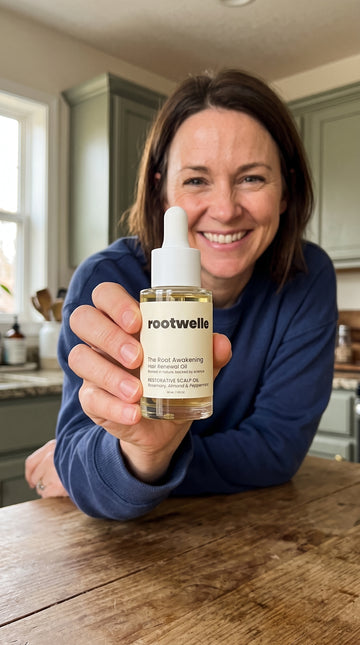
See what our customers are saying about Rootwelle

I put it on before bed. Wake up and my hair actually looks better.


I keep buying the two pack now. One for home, one for my gym bag.

3 weeks in and my scalp already feels so much healthier.

I've spent $400 on hair stuff this year. This is the only one still in my bathroom.

My scalp hasn't felt this calm in years.

A staple in my morning routine these days - can't go without it.

Week 6 and my part is literally narrower. I measured it.

Finally stopped dreading wash day - it really is the little things.

Rootwelle is built for daily use, not quick fixes. Here's how things tend to shift once it's part of your routine.

A few drops directly to the scalp. Where the problem actually lives.

Sixty seconds with fingertips - this is the part that matters most. Many women notice their scalp feels calmer after the first week.

Leave it in. It keeps working while you do everything else.


Botanicals that actually reach the follicle. Nothing that doesn't.


Try it for 30 days, if it's not for you, reach out to us for a full refund - no questions asked.
Honest answers, in plain English. Still unsure? Start with one bottle
Hear it straight from the women who stuck with it.
I'd given up. Genuinely. Then month 3 I saw baby hairs all along my hairline that weren't there before. I just stood there and cried.
 Taryn M.Verified Customer
I didn't notice in the mirror first. I noticed because I stopped dreading the shower. The drain was almost clear. I actually stood there and counted.
 Nina C.Verified Customer
I'd been down every forum rabbit hole for months. At some point I realised I hadn't searched anything about hair loss in weeks. That's when I knew something had actually shifted.
 Karen O.Verified Customer
I'd been losing hair for months and nothing was working. By week 8 I noticed my ponytail actually felt thicker. It's the first thing that's made a real difference.
 Laura P.Verified Customer
I've tried so many things that felt like a chore. This takes two minutes and my scalp feels completely different. I actually look forward to it every morning now.
 Sophie L.Verified Customer
Years of tight styles left my edges thin and sparse. This serum reaches the scalp where it matters. After two months I can see baby hairs returning. My confidence is coming back. I actually look forward to applying it and giving my scalp the care it deserves.
 Aisha K.Verified Customer


